Amendments That Changed Everything
Twenty-seven times, the American people have rewritten the rules. These are the amendments that bent the arc of history.
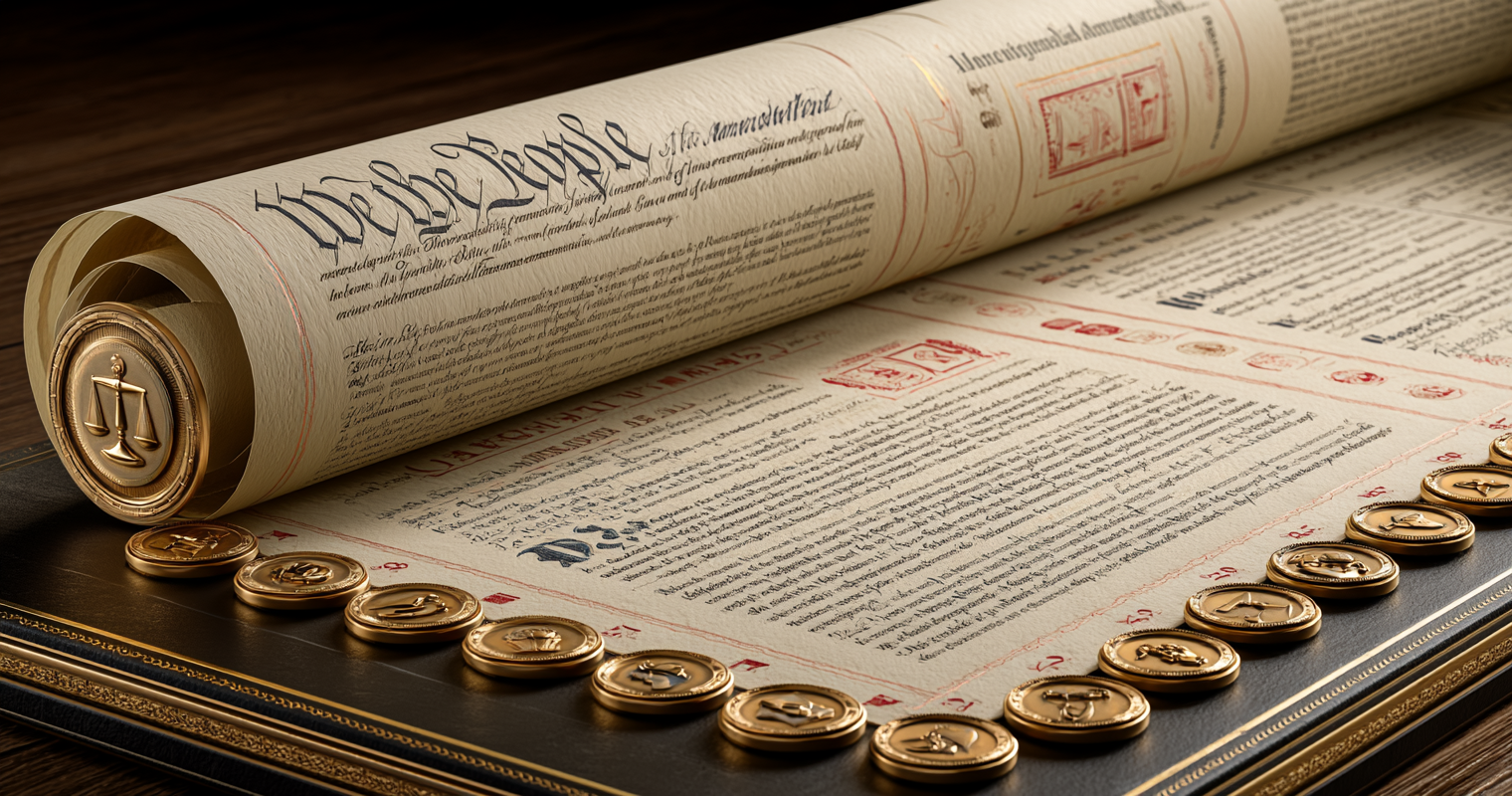
How Amendments Happen
The founders made the Constitution deliberately hard to change — but not impossible. Article V lays out two paths to amendment. In practice, only one has ever been used: Congress proposes an amendment by a two-thirds vote in both chambers, and three-fourths of state legislatures (currently 38 of 50) must ratify it.
The second path — a constitutional convention called by two-thirds of state legislatures — has never been successfully invoked, though several movements have come close. This path is both more democratic (it bypasses Congress entirely) and more unpredictable (a convention could theoretically rewrite the entire Constitution).
The difficulty of amendment is by design. The Constitution isn't meant to bend to momentary passions. But when an amendment does pass, it represents something powerful: a supermajority consensus across the nation that the fundamental rules need to change. In that sense, every successful amendment is an act of direct democracy at the highest level.
The Bill of Rights (1791)
The first ten amendments were the price of ratification. Anti-Federalists — led by George Mason, Patrick Henry, and others — refused to support the Constitution without explicit protections for individual rights. Madison, who initially considered a bill of rights unnecessary, eventually drafted the amendments himself to secure ratification.
The First Amendment alone contains five freedoms: religion, speech, press, assembly, and petition. Together, these guarantees form the foundation of civic life in America. Without them, a platform like Constitution.Vote couldn't exist — the right to speak freely, assemble digitally, and petition the government for redress are precisely what make democratic participation possible.
The Second Amendment (right to bear arms), Fourth Amendment (protection against unreasonable searches), and Fifth Amendment (due process, self-incrimination protections) remain among the most actively debated provisions in American law — proof that the Bill of Rights is as alive today as it was in 1791.
The Reconstruction Amendments (1865–1870)
The Thirteenth, Fourteenth, and Fifteenth Amendments — ratified in the aftermath of the Civil War — represent the most dramatic rewriting of the American social contract since the founding.
The Thirteenth Amendment (1865) abolished slavery. In a single sentence, it overturned an institution that had existed on the continent for 246 years and that the original Constitution had protected through multiple clauses, including the Three-Fifths Compromise.
The Fourteenth Amendment (1868) is arguably the most important amendment ever ratified. It established birthright citizenship, guaranteed "equal protection of the laws," and applied the Bill of Rights to state governments through the doctrine of incorporation. Nearly every landmark constitutional case of the last 150 years — from Brown v. Board of Education to District of Columbia v. Heller to Obergefell v. Hodges — rests on the Fourteenth Amendment.
The Fifteenth Amendment (1870) prohibited denying the vote based on "race, color, or previous condition of servitude." In theory, it enfranchised Black men nationwide. In practice, Southern states spent the next century devising ways to circumvent it — poll taxes, literacy tests, grandfather clauses, and outright violence — until the Voting Rights Act of 1965 finally enforced the amendment's promise.
Expanding the Franchise
Several amendments have focused on a single, radical idea: more people should be able to vote.
The Seventeenth Amendment (1913) transferred the election of U.S. senators from state legislatures to direct popular vote. It was a direct democracy reform — literally removing an intermediary between citizens and their representatives. Before it passed, Senate seats were frequently bought and sold through corrupt state legislatures. Critics of the amendment argue it weakened federalism by severing state legislatures' direct connection to the federal government — a structural check the founders considered essential.
The Nineteenth Amendment (1920) guaranteed women the right to vote, after a movement that lasted over 70 years. When it passed, the American electorate doubled overnight.
The Twenty-Sixth Amendment (1971) lowered the voting age from 21 to 18. The driving argument was devastatingly simple: if eighteen-year-olds were old enough to be drafted and die in Vietnam, they were old enough to vote.
Each of these amendments expanded who counts as "the people" in "We the People" — a trajectory that some celebrate as democratic fulfillment and others view with concern as a departure from the founders' republican design.
The Amendment Process as Direct Democracy
There's a deep irony in the American system: the Constitution was designed to restrain direct democracy, but the process of amending it is one of the most democratic acts possible. An amendment requires supermajority consensus across the nation — not a bare 51%, but an overwhelming mandate that spans states, parties, and regions.
Every successful amendment represents a moment when the American people — collectively, emphatically — demanded change that ordinary politics couldn't deliver. Slavery couldn't be ended by legislation alone. Women's suffrage couldn't be won state by state fast enough. These changes required constitutional force.
Constitution.Vote doesn't propose amendments. But it does something the founders never had: it makes the people's consensus visible in real time, on every issue, every day. When the platform shows that 70% of Americans across all parties support a particular policy, that's the kind of signal that has historically preceded constitutional change. The assembly doesn't write amendments — it creates the conditions that make them inevitable.
Ready to make your voice heard?
Join the people's assembly and vote on the issues that matter. Your voice, verified and counted.
Continue Reading
The Constitutional Convention of 1787
Fifty-five men in a sweltering Philadelphia room invented a nation. Here's what they argued about — and what they got wrong.
Civic FoundationsThe Federalist Papers: A Modern Reader's Guide
Eighty-five essays that sold America on its own Constitution — and still have something to teach us.
Modern ContextWhy Your Voice Is Missing from Washington
The representation gap is real, measurable, and getting worse. Here's what the data says.