The Constitutional Convention of 1787
Fifty-five men in a sweltering Philadelphia room invented a nation. Here's what they argued about — and what they got wrong.
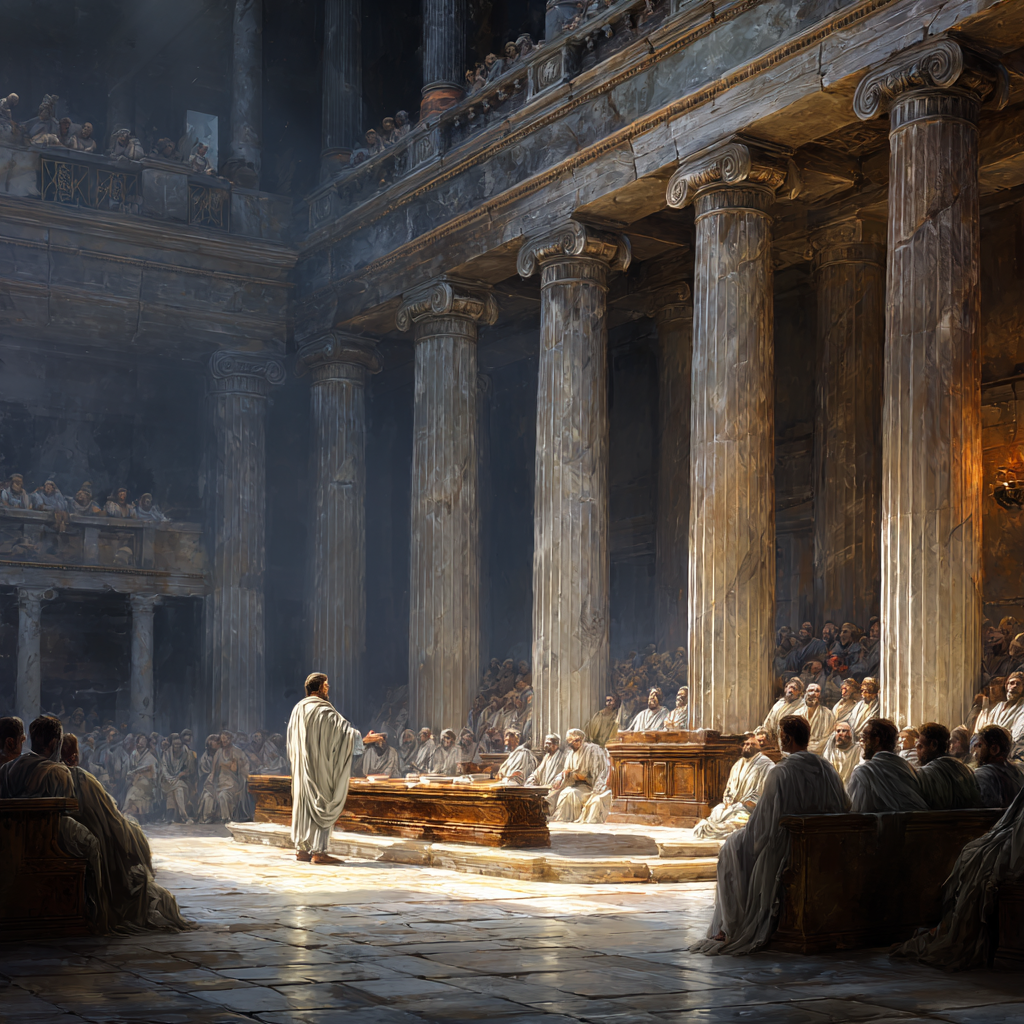
A Nation in Crisis
By 1787, the United States was failing. The Articles of Confederation — the nation's first governing document — had created a central government so weak it could barely function. Congress couldn't levy taxes. It couldn't regulate commerce between states. It couldn't even raise an army without begging state legislatures for troops and money.
Shays' Rebellion in 1786 made the crisis impossible to ignore. When Massachusetts farmers, crushed by debt and taxes, took up arms against the state government, Congress was powerless to respond. George Washington, watching from Mount Vernon, wrote: "There are combustibles in every State which a spark might set fire to."
The spark had been lit. In May 1787, delegates from twelve states (Rhode Island refused to participate) gathered at the Pennsylvania State House in Philadelphia. Their official mandate was narrow: revise the Articles of Confederation. Their actual ambition was revolutionary: design an entirely new system of government.
The Men in the Room
The 55 delegates who attended the Convention were, by any measure, an extraordinary group. Their average age was 42. Most were lawyers, planters, or merchants. Many had fought in the Revolution. Several had signed the Declaration of Independence.
James Madison arrived with a fully developed plan for a new government — what became known as the Virginia Plan. He'd spent months studying the history of republics and confederacies, and he came to Philadelphia better prepared than anyone. History would call him the "Father of the Constitution."
Benjamin Franklin, at 81, was the oldest delegate and perhaps the wisest. His role was less about specific proposals and more about finding consensus. When debates grew heated, Franklin's wit and moral authority kept the Convention from collapsing.
George Washington presided over the Convention as its president. He spoke rarely but his presence lent the proceedings legitimacy and gravitas. Everyone knew that whatever system they designed, Washington would likely be its first leader.
Alexander Hamilton represented New York but was outvoted by his state's other delegates, who opposed a strong central government. He attended intermittently but delivered a remarkable six-hour speech advocating for an executive who served for life — a proposal so extreme it made Madison's plan look moderate by comparison.
The Great Debates
The Convention's central tension was between large states and small states. Madison's Virginia Plan proposed a legislature with representation based on population — which would give Virginia, Pennsylvania, and Massachusetts enormous power. Small states countered with the New Jersey Plan, which preserved equal representation for each state, as under the Articles.
The Great Compromise (also called the Connecticut Compromise) resolved this impasse: a bicameral legislature with a House of Representatives based on population and a Senate with two members per state. It was neither side's first choice, which is often the mark of a good compromise.
But the Convention's most consequential — and most shameful — compromise involved slavery. Southern states wanted enslaved people counted for purposes of congressional representation but not for taxation. The result was the Three-Fifths Compromise: each enslaved person would count as three-fifths of a free person for both representation and taxation. This compromise, which treated enslaved human beings as fractions of people for political calculations, embedded slavery into the nation's constitutional structure — a stain that would take a civil war and the Thirteenth Amendment to undo.
The delegates also debated presidential power (how strong? how long?), judicial review (should courts strike down laws?), and the amendment process itself. On nearly every question, the final document represented a compromise between competing visions of how much power the people should wield directly.
Why They Chose a Republic
The founders were deeply suspicious of direct democracy. Madison, in Federalist No. 10, warned that "pure democracies have ever been spectacles of turbulence and contention" and were "incompatible with personal security or the rights of property." He argued for a republic — a system of elected representatives who would "refine and enlarge the public views."
But not all founders agreed. Thomas Jefferson (who was in Paris during the Convention) favored more direct popular control. He advocated for frequent constitutional conventions and believed that "a little rebellion now and then is a good thing." George Mason refused to sign the Constitution partly because it lacked a bill of rights that would protect individual citizens from government overreach.
The founders' choice of a republic over a direct democracy was shaped by practical constraints as much as philosophy. In 1787, there was simply no way for millions of citizens spread across thirteen states to deliberate and vote on complex legislation. The technology didn't exist. Today, it does — though whether technology alone resolves the founders' concerns about direct democracy remains an open question.
A Living Document
The Constitution that emerged from Philadelphia was imperfect — its framers knew it. Franklin, in his final speech to the Convention, confessed: "I agree to this Constitution with all its faults, if they are such; because I think a general Government necessary for us." He asked every delegate who still had objections to "doubt a little of his own infallibility" and sign.
Thirty-nine of the forty-two delegates present did sign, on September 17, 1787. The document they produced has been amended 27 times, survived a civil war, and governed a nation through 239 years of change that its authors could never have imagined.
But the founders also built in a mechanism for evolution: Article V, the amendment process. They understood that no generation should be permanently bound by the decisions of a previous one. The Constitution was designed to be changed — carefully, deliberately, but changed nonetheless. That's the spirit that Constitution.Vote carries forward: the belief that the people's voice should always have a path to power.
Ready to make your voice heard?
Join the people's assembly and vote on the issues that matter. Your voice, verified and counted.
Continue Reading
The Federalist Papers: A Modern Reader's Guide
Eighty-five essays that sold America on its own Constitution — and still have something to teach us.
Civic FoundationsAmendments That Changed Everything
Twenty-seven times, the American people have rewritten the rules. These are the amendments that bent the arc of history.
Civic FoundationsWhat Is Direct Democracy?
From the Athenian agora to the digital age — how citizens can govern themselves without intermediaries.